Exterior doors
Best Entry Door Material for Alabama: Fiberglass, Steel or Wood
Fiberglass, steel and wood each have a place on a North Alabama front door. Here is how humidity, hail and hard afternoon sun should steer your choice.
By the ACM Pros team, Madison, AlabamaUpdated 10 minute read
Quick answer
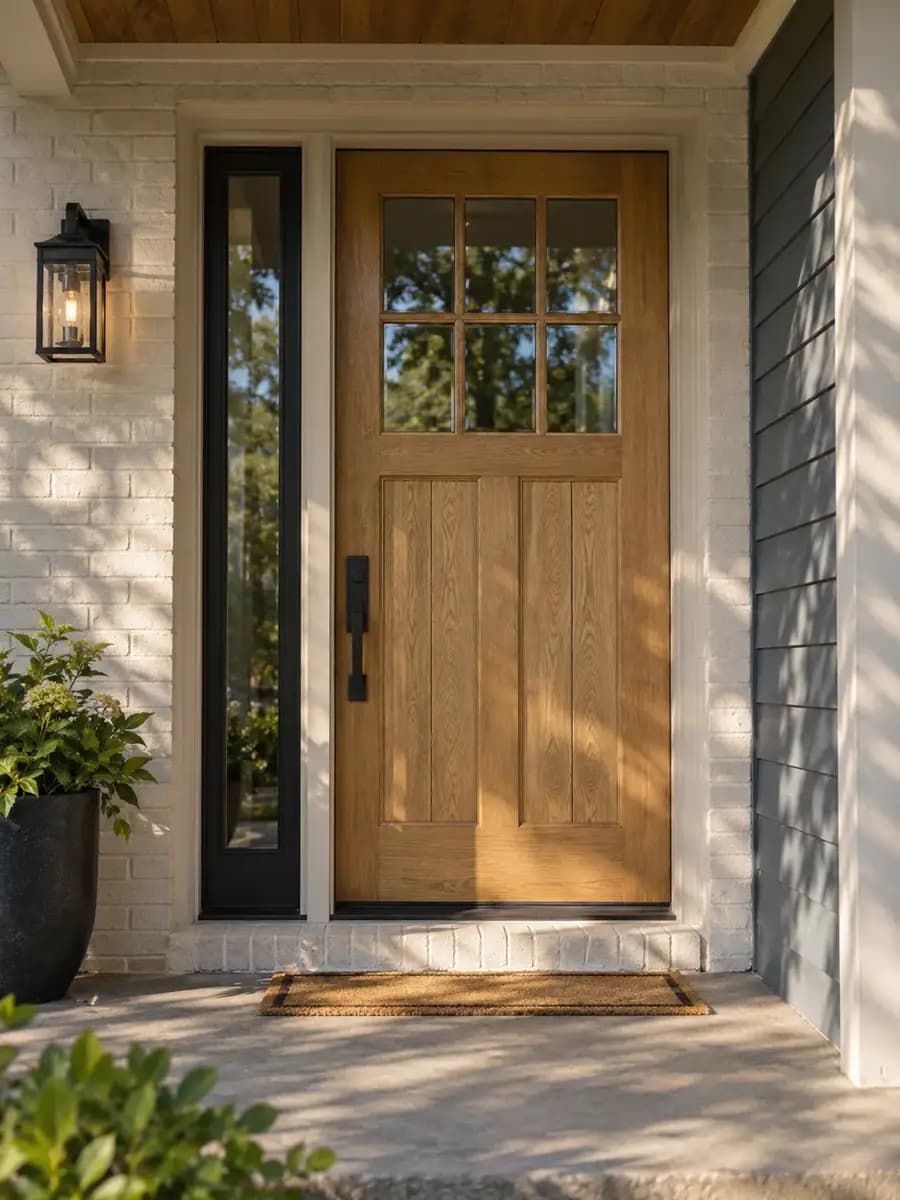
For most North Alabama homes, an insulated fiberglass entry door is the best all-round choice: it barely moves in humid weather, resists dents from hail and everyday knocks, and does not need regular refinishing. Steel is the most affordable and very secure, but it dents permanently and gets hot in direct sun. Wood is the right choice when the house calls for it and the entry sits under a deep porch, with an owner willing to keep up the finish.
Key takeaways
- Insulated fiberglass is the best fit for most North Alabama front entries because it stays stable through humid summers and needs little upkeep.
- Steel is affordable and secure, but hail and everyday bumps leave permanent dents, and a dark steel door gets hot in afternoon sun.
- Wood looks wonderful and can be refinished, but it swells with humidity and belongs under a deep covered porch.
- On an unshaded west or south facing entry, choose a light or medium color and Low-E glass to limit heat.
- A sloped, sealed sill pan under the threshold matters as much as the door material for keeping rot out of the framing.
The ACM Pros replaces exterior windows and installs exterior doors only. We do not install interior doors or interior windows.
Your front door works harder than any other part of the outside of your house. It swings open and shut thousands of times a year, hangs its full weight on a few hinges, and its bottom edge sits right where rainwater collects. In North Alabama it also has to get through long, sticky summers, wind-driven spring storms, the occasional hailstorm and, on many homes, hours of hard afternoon sun.
So when homeowners in Madison, Huntsville and Harvest ask us which entry door material is best, the honest answer starts with the weather and with which way the door faces. This guide walks through fiberglass, steel and wood the way we explain them at the kitchen table: plainly, and without a sales pitch.
Why North Alabama is hard on a front door
Most entry door trouble here comes down to three things: moisture, heat and water at the bottom of the opening. Our cooling season is long and humid, and wood fibers soak up that moisture and swell. That is why a wood door that closed easily in February can drag on its frame in August.
Heat is the second problem. A south or west facing entry with no porch roof can sit in direct sun most of the afternoon, and a dark door in that spot gets very hot on the surface. The outside face expands more than the inside face, and over time that can bow a door slightly out of flat so it no longer seals evenly.
The third is water. Spring storms here often drive rain sideways, straight at the threshold, the strip at the bottom of the doorway that you step over. If water gets past it and into the framing below, the wood underneath can rot quietly for years before anyone notices a soft spot.
The short answer: fiberglass suits most homes here
For the majority of houses we see across North Alabama, an insulated fiberglass door is the best all-round choice. It barely moves with humidity, it does not dent the way steel does, and it does not need sanding and refinishing on a schedule the way wood does. Many fiberglass doors carry a convincing wood grain texture, so you can have the look without the upkeep.
That does not make steel or wood the wrong choice. Steel is a sensible, secure option on a tighter budget, and wood is the right call on some older or custom homes. The rest of this article explains when each one makes sense, so you can decide with your own entry in mind.
Fiberglass entry doors: strengths and limits
A fiberglass door is a molded fiberglass skin over an inner frame, usually filled with foam insulation. The U.S. Department of Energy's Energy Saver guide to doors notes that insulated steel and fiberglass doors are more energy efficient than wood doors, which matters in a climate where the air conditioner runs for months on end.
Where fiberglass shines
- Stable in humidity. It does not swell and shrink with the seasons, so it keeps closing evenly against its weatherstrip, the flexible seal around the frame that the door presses into when it shuts.
- Resists dents. Bumps from furniture, strollers or hail do not leave the permanent dimples that steel can.
- Low upkeep. A painted or factory-finished fiberglass door mostly needs an occasional wash.
- Flexible looks. It can be smooth and painted, or textured and stained to resemble wood.
What to keep in mind
Fiberglass usually costs more than a basic steel door. A stained finish will still weather on a sunny elevation, so ask how that finish should be cared for. And a very dark color on an unshaded entry still gets hot, so the color you pick matters even with fiberglass.
Steel entry doors: strong, affordable and easy to dent
A steel door is a thin steel skin wrapped around an insulating foam core. The Department of Energy describes this as one of the most common types of exterior door, often sealed with a magnetic weatherstrip that works much like the seal on a refrigerator.
Steel has real strengths. It stands up well to forced entry, it is usually the most affordable of the three materials, and its foam core insulates well. For a side door, a garage entry or a rental property, it is often the practical answer.
The trade-offs show up in our climate. A dent in steel is permanent, and hail, a ladder or a swinging bicycle pedal can leave a mark that never comes out. A steel skin also gets hot in direct sun, so a dark steel door facing west can be uncomfortable to touch on a July afternoon. And if the factory coating is scratched through near the bottom edge, where water and grit collect, the steel underneath can begin to rust.
Wood entry doors: beautiful, but they need shelter and care
Nothing looks quite like real wood. On some homes, such as an older house in one of Huntsville's historic neighborhoods or a custom craftsman build, it is the right choice. Wood can be repaired, sanded and refinished, and a well-made solid wood door has a weight and feel that many people love.
Wood is also the material that asks the most of you here. It takes on moisture in humid months and gives it back in dry ones, which is how panels crack and doors start to stick. Sun and rain break down the finish, so a wood door on an exposed entry needs refinishing far more often than one under a porch. It also insulates less well than an insulated steel or fiberglass door.
Our rule of thumb is simple. Wood belongs under a deep covered porch, with an owner who is happy to keep up the finish. On a bare, sun-facing entry it is fighting the weather every single day.
How the three materials compare
| Factor | Fiberglass | Steel | Wood |
|---|---|---|---|
| Movement in humid weather | Very little | Very little | Swells and shrinks with the seasons |
| Hail and everyday knocks | Resists dents | Dents permanently | Dents and gouges, but can be repaired |
| Strong afternoon sun | Handles it well, though dark colors still heat up | Skin gets hot, especially in dark colors | Finish breaks down fastest |
| Upkeep | Low | Low, but touch up deep scratches | High, with regular refinishing |
| Energy efficiency | Good with a foam core | Good with a foam core | Lower |
| Relative cost | Middle to upper | Usually lowest | Usually highest for quality doors |
| Best fit | Most front entries | Side entries, tighter budgets, rentals | Sheltered entries on homes that call for it |
Which way does your door face?
Before you pick a material or a color, step outside around four o'clock on a summer afternoon and look at your entry. If the sun is beating on the door with no porch roof or overhang to shade it, you have the hardest spot there is for a door.
On a west or south facing entry with no shade, we usually steer people toward fiberglass in a light or medium color. A dark slab, which is the door panel itself apart from its frame, soaks up far more heat than a light one, and that heat is what leads to bowing and early finish failure. If you love a dark door, a covered porch or deep overhang makes it a much safer choice.
Glass matters too. Many entry doors have a sidelight, a tall narrow glass panel beside the door, or a transom, a glass panel above it. They bring in welcome light, but on a sunny elevation they also bring in heat. Ask for Low-E glass, which has a thin, invisible coating that reflects much of the sun's heat while still letting light through.
Thinking about adding a storm door to protect your new door? Read our guide on whether storm doors are worth it in North Alabama first, because a glass storm door over a dark, sun-facing door can trap heat against it.
The installation matters as much as the material
Here is something many homeowners never hear: the failure we see most often is not a bad door. It is a rotted threshold and soft framing underneath it, caused by water getting under the door, and that is almost always an installation problem rather than a product problem.
Every exterior door we set gets a sill pan. A sill pan is a shallow tray that sits under the threshold, with turned-up ends called end dams, so any water that sneaks past the door drains back outside instead of into the framing. Ours are sloped and sealed. Once the door is in, you will never see the sill pan again, which is exactly why some installers skip it.
Slab only, or a prehung door?
You can replace just the slab, or you can replace the whole unit with a prehung door, which arrives already hung in a new frame with its hinges, weatherstrip and threshold in place. A slab-only swap can work when the existing frame is square, dry and solid. If the threshold is soft, the frame is out of square or the old door has been binding for years, a prehung unit set over a proper sill pan is the lasting fix.
If we find rot when the old door comes out, we photograph it before anything gets covered, so you can see exactly what was there. You can read more about how we handle a door job on our exterior door installation page.
Questions to settle before you order
- Does the entry get direct afternoon sun? If so, lean toward fiberglass in a light or medium color.
- Is there a covered porch? Deep shelter opens the door to wood and to darker colors.
- Do you want glass? Decide on sidelights, a transom or glass in the door itself, and ask for Low-E glass on a sunny side.
- Is the existing frame sound? A soft threshold means replacing the full unit, not just the slab.
- How much upkeep do you want? Be honest about whether you will refinish a wood door on schedule.
- Is the hardware up to daily use? On any material, a solid lock with its strike plate screwed into the wall framing, not just the door frame, makes a real difference to security.
When you gather quotes, make sure each one names the door material, the glass and whether the frame and threshold are being replaced. Our guide on how to compare exterior contractor quotes shows what to look for, and you can browse the styles we install on our entry doors page.
The easiest way to decide is to stand at your own front door with someone who installs them for a living. Brad and Chase Miller offer free in-home estimates across Madison, Huntsville, Harvest and the rest of North Alabama, with a written line-item scope, the materials named and a price per opening that will still be the same next week. Request your free estimate or call us at (256) 585-6817.
Questions people ask
Is fiberglass or steel better for a front door in Alabama?
For most front entries here, fiberglass is the better long-term choice because it resists dents and stays stable in humid weather. Steel costs less and is very secure, so it makes sense for side doors, rentals or tighter budgets. Both insulate well when they have a foam core.
Will a dark front door warp in the Alabama sun?
A dark door on an unshaded south or west facing entry gets much hotter than a light one, and that heat can bow the door or wear out its finish early. Fiberglass handles it better than wood or steel. If you want a dark color, a porch roof or deep overhang helps a great deal.
Can I replace just the door and keep my old frame?
Sometimes. If the frame is square, dry and solid, a slab-only replacement can work well. If the threshold feels soft or the door has been sticking for years, replacing the whole prehung unit over a new sill pan is the repair that lasts.
How often does a wood front door need refinishing?
It depends mostly on exposure. A wood door tucked under a deep porch can go much longer between refinishing than one that takes direct sun and rain. Watch for a dull, chalky or cracking finish, and refinish before bare wood starts to show.
Do glass sidelights make a front door less efficient?
Glass lets more heat through than an insulated door panel, so sidelights and transoms add some heat gain, especially on a sunny side of the house. Low-E glass helps limit that. Many homeowners decide the extra daylight is worth it.
Do you install interior doors too?
No. We work only on the outside of homes, installing exterior entry doors, sliding patio doors, exterior French doors and storm doors. We do not install interior doors or do any interior remodeling.