Exterior windows
Low-E Glass Explained: Choosing Window Glass for Alabama Sun
Low-E coatings do most of the work in a modern window. Learn what Low-E, U-factor and SHGC mean, and how to pick glass for long, sunny North Alabama summers.
By the ACM Pros team, Madison, AlabamaUpdated 8 minute read
Quick answer
Low-E (low emissivity) glass has a microscopically thin, nearly invisible metallic coating that reflects heat while letting most daylight through. In North Alabama, which ENERGY STAR places in its South-Central climate zone, the main job of the glass is keeping summer sun heat out, so look for a low solar heat gain coefficient (SHGC). ENERGY STAR's South-Central criteria call for an SHGC of 0.23 or lower and a U-factor of 0.28 or lower, both shown on the window's NFRC label.
Key takeaways
- Low-E is a thin metallic coating on the glass that reflects heat while letting most visible light through.
- In North Alabama the biggest job for window glass is blocking summer sun heat, so the SHGC number matters most.
- Madison, Limestone and Morgan counties are in ENERGY STAR's South-Central zone, where windows need a U-factor of 0.28 or lower and an SHGC of 0.23 or lower.
- Read the NFRC label to compare U-factor, SHGC and visible transmittance across brands on equal terms.
- Glass that blocks more heat can also let in less daylight, so check visible transmittance where light matters.
- A Low-E coating with an argon fill is the practical baseline here. Triple-pane glass rarely earns its keep in this climate.
The ACM Pros replaces exterior windows and installs exterior doors only. We do not install interior doors or interior windows.
The short answer
Low-E glass carries a microscopically thin, nearly invisible metallic coating that reflects heat while letting most daylight through. It is one of the most important features of a modern window in North Alabama, because our long, humid cooling season makes keeping the sun's heat out the main job of the glass.
When you compare windows, look at the solar heat gain coefficient first. ENERGY STAR places Madison County in its South-Central climate zone, where a qualifying window needs an SHGC of 0.23 or lower and a U-factor of 0.28 or lower. Both numbers are printed on the window's NFRC label.
What is Low-E glass?
Low-E stands for low emissivity. Emissivity describes how readily a surface radiates heat. Plain glass radiates heat easily and lets most of the sun's energy straight through, so on its own it does little to slow heat moving into or out of a room.
A Low-E coating is a layer of metal or metal oxide so thin you cannot see it, applied to one of the glass surfaces when the window is made. It reflects heat, in the form of infrared energy, while letting most visible light pass. In summer it turns away much of the sun's heat. In winter it helps reflect indoor warmth back into the room.
Not all Low-E coatings are alike. The U.S. Department of Energy notes in its window purchasing guidance that Low-E products come in low, moderate and high solar gain versions, that low gain products are designed for hot climates, and that Low-E coatings, especially spectrally selective ones, are effective at reducing summer heat gain without significantly affecting visible light or color. A spectrally selective coating is tuned to block the heat-carrying part of sunlight while passing the part you see.
The numbers on the label: U-factor, SHGC and visible transmittance
The National Fenestration Rating Council, or NFRC, is the independent, nonprofit body that certifies the energy ratings of windows, doors and skylights. Its label lets you compare windows from different makers on equal terms. Here is what each number means.
U-factor
The U-factor measures how well a window keeps heat from escaping a room, or more broadly how easily heat flows through it. Lower is better. It matters most on cold nights, and it still helps on hot days when the house is much cooler than the air outside.
Solar heat gain coefficient (SHGC)
The SHGC is the share of the sun's heat that gets through the window, on a scale from 0 to 1. Lower numbers block more solar heat. In a cooling-dominated climate like ours, this is usually the most important number on the label.
Visible transmittance (VT)
Visible transmittance measures how much daylight comes through, also on a scale from 0 to 1. Higher means a brighter room. The Department of Energy's guidance advises that when you buy windows with a low SHGC, you check that the visible transmittance is not too low.
Air leakage and condensation resistance
Some labels also show air leakage, how much outside air passes through the window itself, where lower is better, and condensation resistance, where a higher number means the window resists condensation better.
| Rating | What it tells you | Better | Why it matters here |
|---|---|---|---|
| U-factor | How easily heat flows through the window | Lower | Helps through cold snaps and on hot days alike |
| SHGC | How much of the sun's heat gets in | Lower | Cuts the summer heat load on sunny walls |
| Visible transmittance | How much daylight gets in | Higher | Keeps rooms bright behind heat-blocking glass |
| Air leakage | How much air passes through the unit | Lower | Less humid air and pollen getting in |
| Condensation resistance | How well the window resists condensation | Higher | Helps on cool mornings in humid rooms |
Why North Alabama glass should be chosen for the sun
Much of the window advice you read online is written for northern homes, where the main goal is holding heat in through a long winter. Here, the bigger problem runs the other way. Our cooling season is long and humid, and sunshine through glass adds heat to a house exactly when the air conditioner is already working hardest.
That is why the SHGC deserves more of your attention than the number of panes. A west-facing window that takes full afternoon sun can warm a room for hours, and the right coating does more for that room than a third pane of glass would.
Winter still matters. North Alabama gets real cold snaps, and a low U-factor helps then. The good news is that today's Low-E glass can deliver a low SHGC and a low U-factor in the same window.
What ENERGY STAR asks for in North Alabama
ENERGY STAR sets its window criteria by climate zone. Its climate zone pages place Madison County, along with neighboring Limestone and Morgan counties, in the South-Central zone. For windows in that zone, the criteria are:
- ENERGY STAR certified: a U-factor of 0.28 or lower and an SHGC of 0.23 or lower.
- ENERGY STAR Most Efficient: a U-factor of 0.20 or lower and an SHGC of 0.23 or lower.
As ENERGY STAR's key product criteria page explains, these criteria are based on NFRC certified ratings. A qualifying window's ENERGY STAR label shows a map with the zones it meets shaded, and a single window can qualify for more than one zone. Criteria are revised from time to time, and if you live outside these three counties, the same ENERGY STAR pages let you look up your own.
Choosing glass wall by wall
A thoughtful installer does not treat every window the same. The right coating can follow the direction each wall faces and how much shade it gets:
- West-facing windows take the harshest sun of the day, in the hottest part of the afternoon. A low SHGC matters most here.
- South-facing windows get sun for much of the day. A low SHGC is wise here too, unless a deep roof overhang or porch shades them in summer.
- East-facing windows catch morning sun, which is milder but still adds heat on summer mornings.
- North-facing and well-shaded windows get little direct sun, so visible transmittance and U-factor carry more weight there.
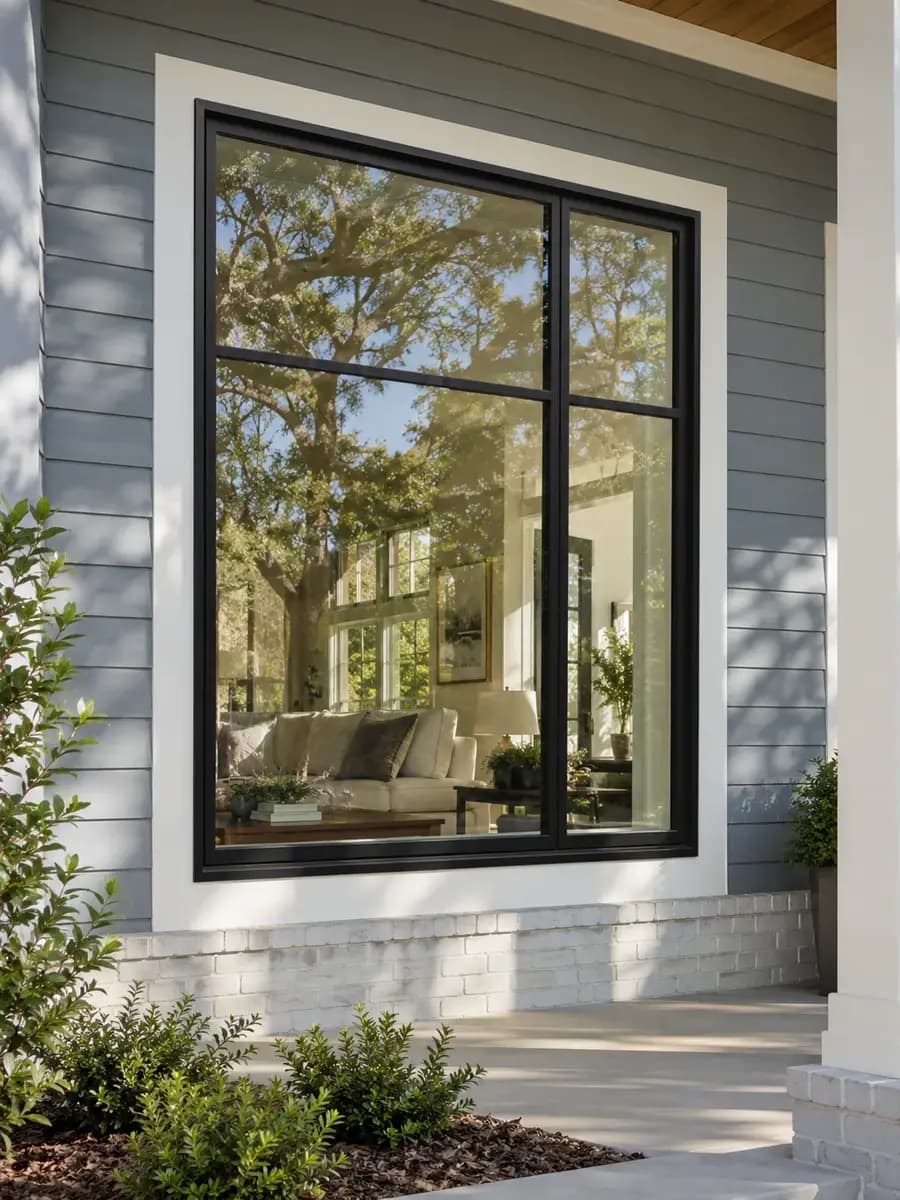
- Large fixed windows, such as picture windows, have the most glass and so the most potential heat gain. Give them the closest look.
Keep the look consistent from the street. Some coatings carry a slight tint or reflection, so ask to see samples side by side before mixing glass types on the same side of the house.
Gas fills, extra panes and tints
Most modern replacement windows are double-pane: two layers of glass sealed together with a space between them. Filling that space with argon or krypton gas slows heat moving through the glass, and the Department of Energy lists gas fills, along with Low-E coatings and extra panes, among the features that lower a window's U-factor. A Low-E coating with an argon fill is the practical baseline for this climate.
Triple-pane glass mainly solves a cold-climate problem. In North Alabama the money usually does more good spent on the right coating and on careful installation. Tinted glass also cuts solar heat, but it cuts daylight too, which is why a spectrally selective Low-E coating is usually the better choice for a home.
Questions to ask about the glass in a quote
A quote that just says energy-efficient glass is not a specification. Ask for these details in writing:
- The name of the Low-E coating, and whether it is a low solar gain product.
- The U-factor, SHGC and visible transmittance for each window type, taken from the NFRC label or the manufacturer's certified ratings.
- Whether the glass has an argon fill.
- Whether the windows meet ENERGY STAR criteria for the South-Central zone.
- Whether any windows get a different glass package from the rest, and why.
Our written estimates name the materials for every opening, so you can check these numbers before you sign. You can read more about how we work on our exterior window replacement page.
What Low-E glass will not do
Low-E glass is a big step up from the single-pane and early double-pane windows in many North Alabama homes, but it has limits.
- It will not stop leaks or drafts from a poorly sealed opening. The NFRC notes in its FAQ that its performance ratings do not take into account how a product is installed.
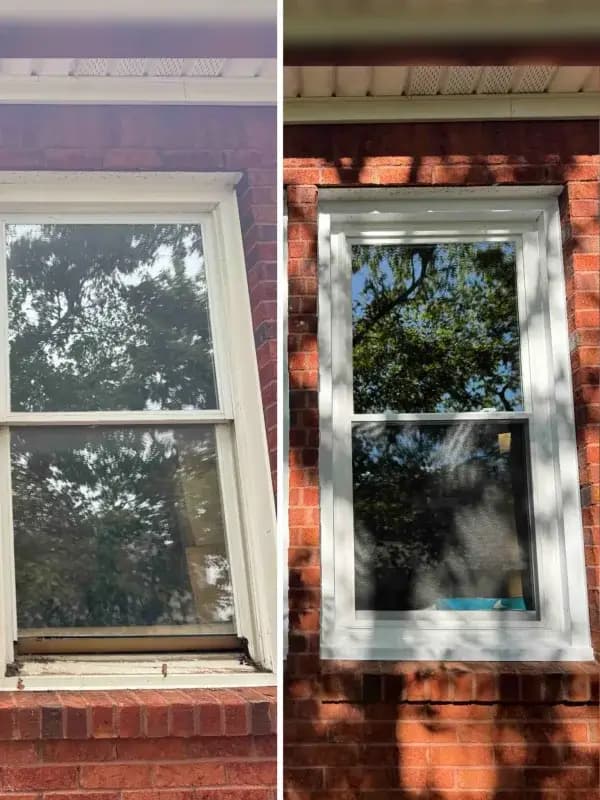
- It will not fix a failed frame or a rotted sill. Those need repair first.
- It will not brighten a dark room. Watch the visible transmittance if daylight matters to you.
Your power bill depends on insulation, ductwork and thermostat habits as much as on your windows, so be wary of anyone who promises an exact saving.
Choose your glass with someone who has seen your house
The right glass depends on which way your windows face, what shades them and how you use each room. For more on frames and styles, see our guides to the best windows for North Alabama and vinyl vs fiberglass windows. When you are ready, request a free in-home estimate or call (256) 585-6817. We will measure every opening, name the glass in a written scope, and price each window so you can compare with confidence.
Questions people ask
Does Low-E glass make my house darker?
Not much, with a well-chosen coating. Spectrally selective Low-E coatings are designed to block heat while letting most visible light through. Check the visible transmittance on the label, where a higher number means more daylight.
Can you see the Low-E coating on the glass?
The coating is far too thin to see as a film, though some coatings give glass a faint tint or reflection in certain light. Looking at samples side by side is the best way to judge it. Using the same glass on each side of the house keeps it looking uniform.
Is triple-pane glass worth it in Alabama?
Rarely. Triple-pane glass mainly helps with long, cold winters. In North Alabama, a good double-pane window with the right Low-E coating and an argon fill usually gives better value.
What SHGC should I look for in Huntsville?
ENERGY STAR's criteria for the South-Central zone, which includes Madison County, call for an SHGC of 0.23 or lower. On west and south walls that take strong sun, staying at or below that level makes sense. On shaded north walls, visible transmittance deserves more weight.
Can I add Low-E to my existing windows?
Low-E coatings are normally applied when the glass is made, so the usual route is new windows or new glass. Window films and storm windows with Low-E glass exist as alternatives. Whether either makes sense depends on the condition of your current windows.
Where do I find a window's U-factor and SHGC?
On the NFRC label, the temporary sticker on a new certified window. The same ratings can be looked up in NFRC's online Certified Products Directory. A good written quote should also list them for each window type.